Facilitator Toolkit
Background
User Research
Problem Definition
Ideation
Prototyping
Beta
Outcomes
Facilitator Toolkit
Recognizing a critical gap in how UX workshops were facilitated at Lowe's, I initiated and led the development of a facilitator program that standardized workshop processes across the organization. This program, which started as a side project, evolved into a cornerstone of our design operations, significantly improving how teams collaborate and align on strategic goals. My proactive leadership and strategic foresight positioned me as a key leader in the EUX organization, earning recognition and driving deeper integration between UX and other business functions.
Role
Individual Contributor
Duration
Ongoing
Impact
Advanced EUX Design Maturity for
Scalable Cross-Collaboration and Impact
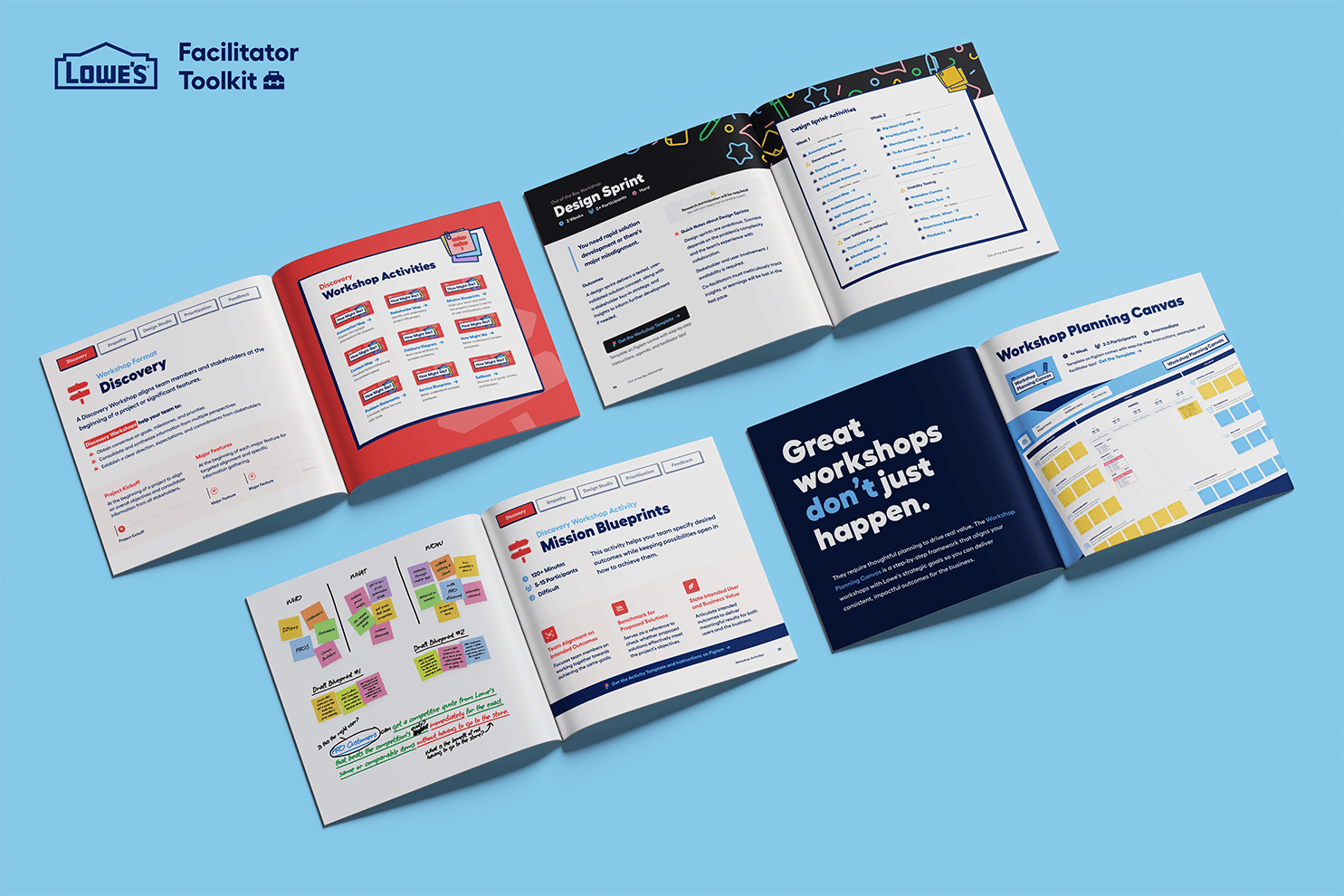
Interior spreads for the major sections of the toolkit covering workshop formats, premade workshops for common outcomes, activity overviews, and facilitator resources.
Background
Workshops at Lowe's are vital for bringing together diverse stakeholders from various business areas, such as Supply Chain, Finance, and Store Operations. These sessions are crucial for securing buy-in and fostering long-term strategic alignment among associates, technology teams, enterprise UX, and business users. However, the complexity of these business areas often requires a nuanced approach to workshop facilitation—one that ensures a holistic understanding of the problem and aligns with the timeline and effort of all involved parties.
While workshops were recognized as critical, not all UX practitioners at Lowe's had the expertise to plan and facilitate these sessions effectively. This inconsistency led to varied outcomes, causing frustration among stakeholders and leaving gaps in strategic alignment. When our Director of UX recognized the need for a more structured approach, I had already created Figma and FigJam templates to address this gap. With several activity templates already in place, I was selected to lead the development of a comprehensive facilitator program that would become a core service of our UX team.
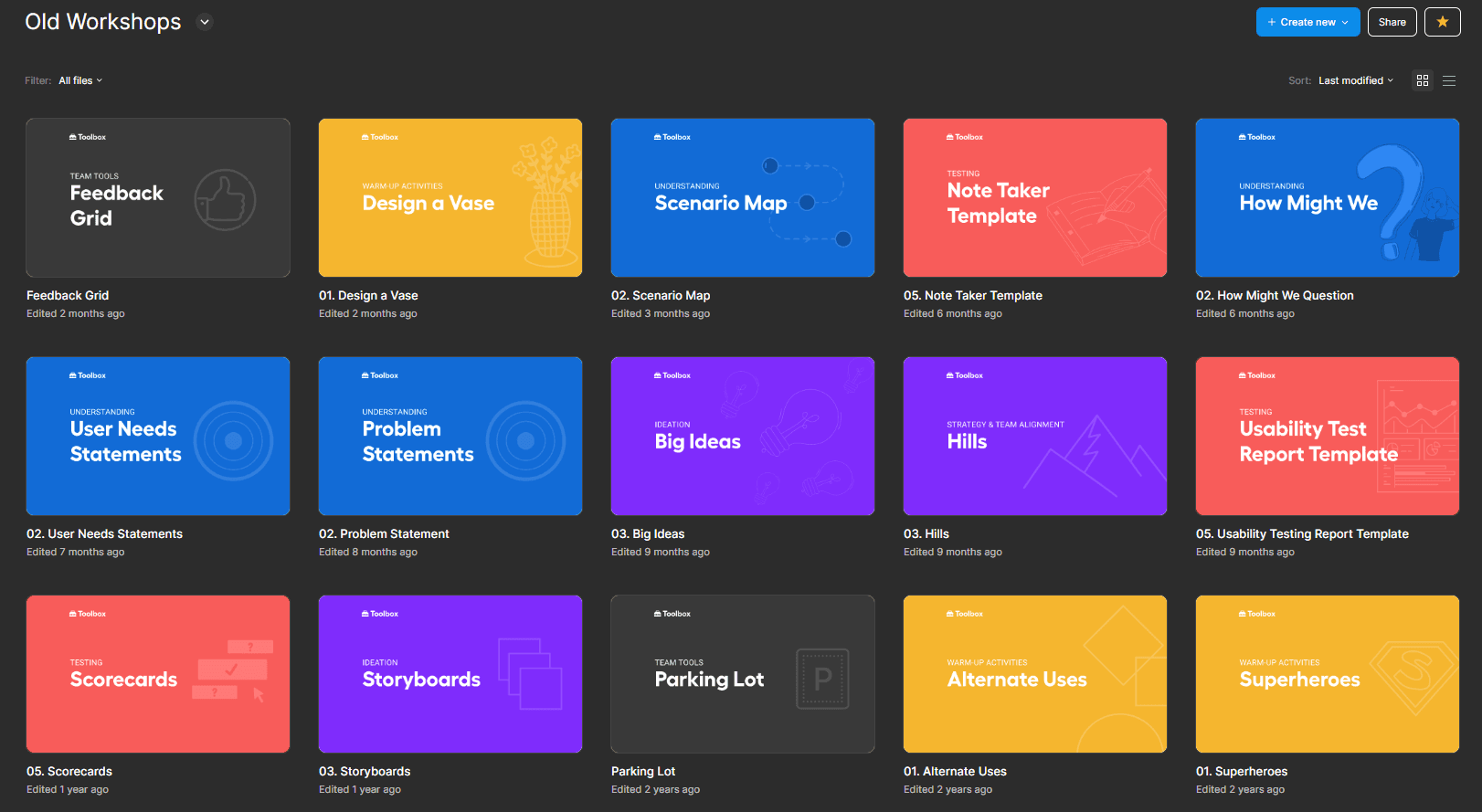
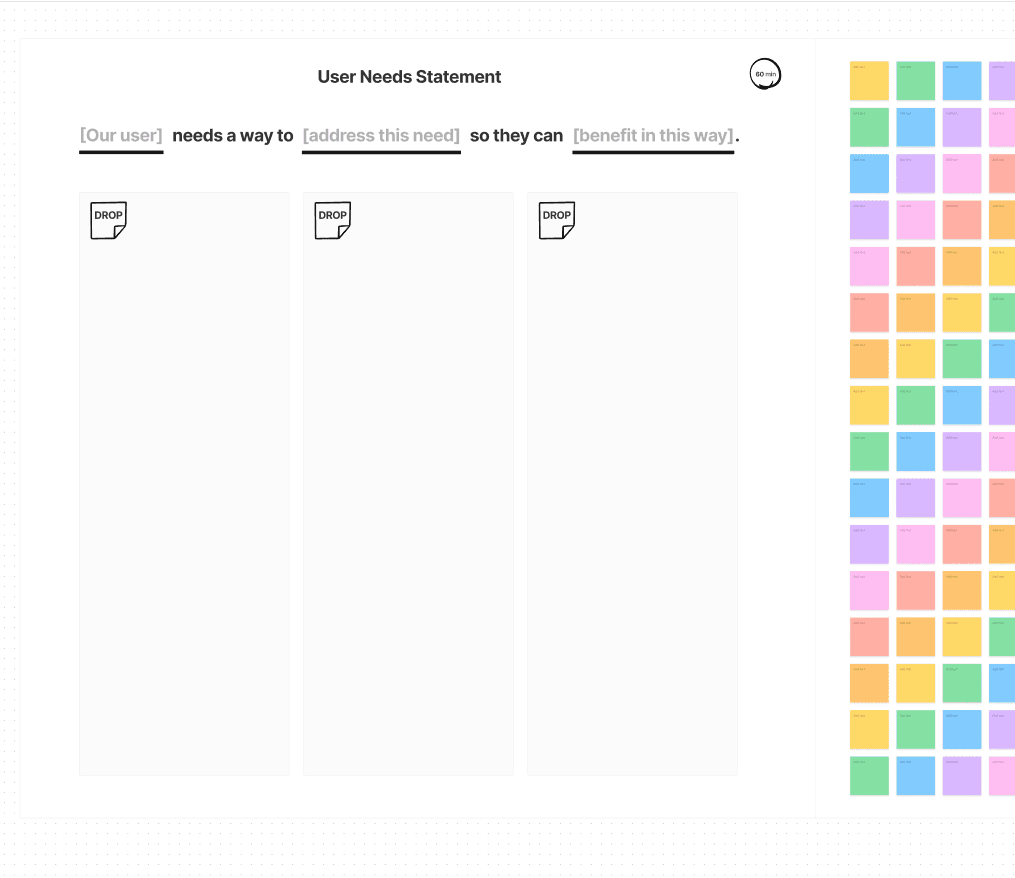
Some of the early workshop resources I created prior to the Facilitator Toolkit initiative.
“Not all UX practitioners have expertise planning and facilitating workshops. Our partners, however, expect workshops as a service we provide to align and mobilize teams toward a clear plan. How do we ensure all practitioners have a model to follow throughout the planning, running and post-workshop phases?"
“
– Original Problem Statement
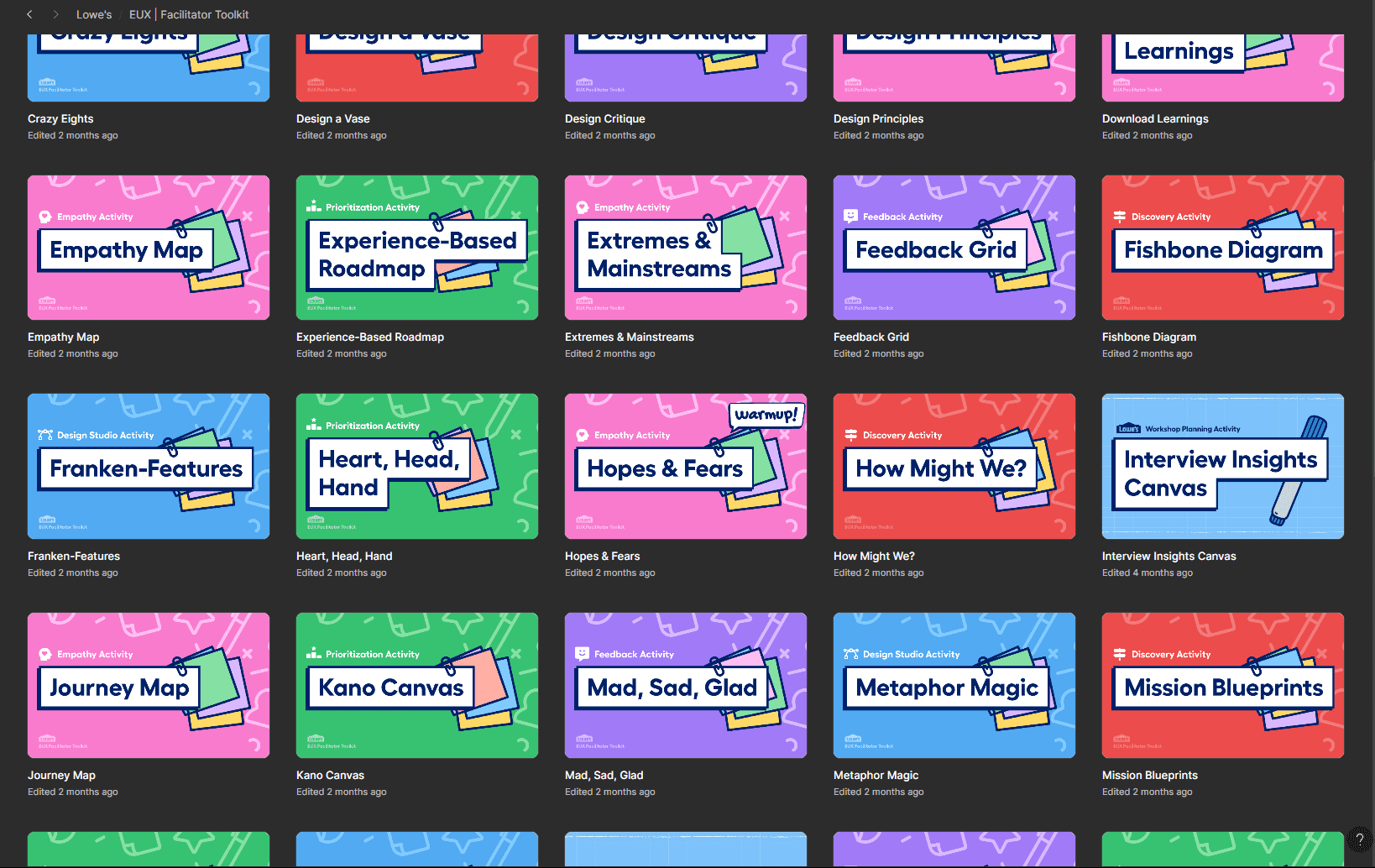
Currently, the Facilitator Toolkit houses 46 activity templates.
Laying the Groundwork
Aligning multiple business functions can be complex, and like any other challenge, I needed to understand what the real needs and challenges our teams were facing. I initiated a comprehensive survey to gather key insights from the EUX organization.
Key Insights Driving Strategy
"We run a workshop a few times a year."
37.5% of respondents only participate occasionally (3-5 times a year), and 25% rare (1-2 times a year), which was not consistent with our targets. This was a clear need to engage more EUX practitioners to consistently design in Design Thinking workshops to ensure alignment and shared understanding across the organization.
"We can't get time with Stakeholders."
71.4% of respondents identified scheduling as one of the biggest roadblocks. Finding time when all necessary stakeholders are available is a significant barrier, indicating a need for leadership buy-in to prioritize attendance.
"Which activities should I use to get to the desired outcome?"
Only 5 respondents provided input on tools, with some mentioning FigJam templates were particularly helpful. The low response rate and the lack of widespread tool adoption suggest facilitators are either unaware of available resources or not fully utilizing them, pointing to an opportunity for further training and resource dissemination.
Next I developed a roadmap that would ensure the Facilitator Toolkit would not only be comprehensive, but was also aligned with the needs of our EUX practitioners. I comprised three goals to address the gaps research had identified:
Every EUX associate can confidently plan and execute workshops regardless of skill or experience level using the toolkit to ensure outcomes are aligned with stakeholder goals.
Stakeholders will actively engage in the Design Thinking process to collaborate and co-create user-centric solutions that drive alignment and business value.
Leaders and facilitators can track and measure the success and outcome of workshops, enabling continuous improvement and strategic growth in organizational Design Maturity.
By grounding the facilitator toolkit in these targeted goals, the program was designed to address immediate challenges, as well as drive long-term, sustainable growth in design maturity and cross-functional collaboration.
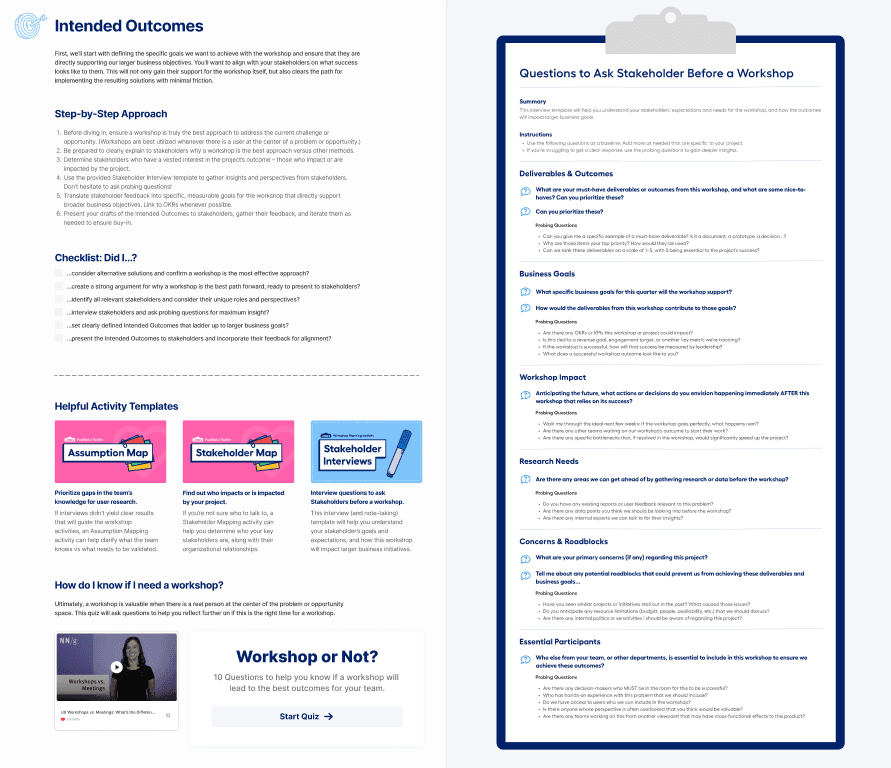
Embedded content regarding Intended Outcomes for the Workshop Planning Canvas included an overview, Step-by-Step approach, a Checklist, helpful activity templates, Stakeholder Interview resource, and information on how to determine if a workshop was needed.
Why did you choose to create a physical copy of the Facilitator Toolkit?
?
The decision to create a physical copy of the Facilitator Toolkit was inspired by the in-person workshops we run at Lowe's. As a way to reach beyond the EUX org, the idea was to create a printed version that could live and exist in the collaborative spaces in the Tech Hub, so that anyone could easily stumble across the Facilitator Toolkit and learn more about workshops, activities, and strategies for creating collaborative outcomes for their teams.
Problem Definition
To validate the "one-click update" concept, we conducted in-depth research with system administrators and their managers through user interviews, contextual inquiry, and collaborative workshopping to better understand the process behind patching these servers.
We interviewed over 30 customers, including 10 sponsor users, to gain first-hand insights into their patching workflows, pain points, and decision-making processes.
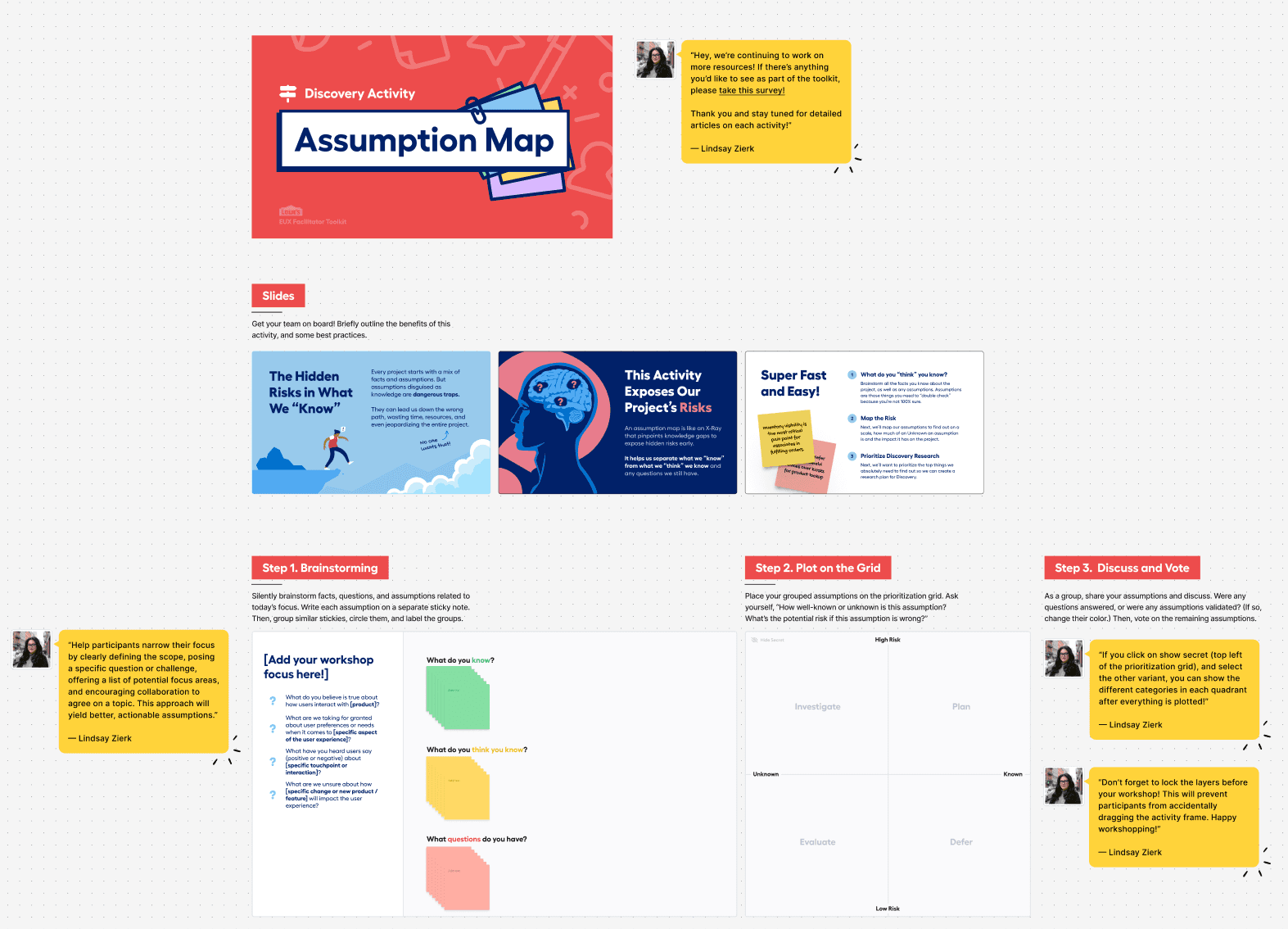
Example of a finalized Workshop Template in FigJam. Templates included a cover card, helpful facilitation tips, educational slides for the activity, activity layouts, and basic instructions.
“I spend 25% of my time during the first half of the year prepping for our audit in July.”
“
– IBM Power Systems Customer, Project Monocle Sponsor User
Approach
Initially a solo project, I identified an opportunity for a fintech platform through extensive user research. With a winning strategy for key stakeholder buy-in, this grew into a significant business initiative for Lowe's.
Initially a solo project, I identified an opportunity for a fintech platform through extensive user research. With a winning strategy for key stakeholder buy-in, this grew into a significant business initiative for Lowe's.
“When is the release date for Monocle? I already have reserved a portion of my budget to purchase it.”
“
– IBM Power Systems Customer, Project Monocle Sponsor User
Outcomes
The Design Thinking Facilitator Toolkit enabled teams to
Initially a solo project, I identified an opportunity for a fintech platform through extensive user research. With a winning strategy for key stakeholder buy-in, this grew into a significant business initiative for Lowe's.
Doug Powell, former VP of Design at IBM, showcases Project Monocle as the case study for how design is driving business outcomes at scale during the O'Reilly Design Conference.
My Contributions
Design Thinking Facilitation
I designed and facilitated workshops that brought together a diverse team—including designers, developers, sponsor users, subject matter experts, and senior executives—to align on user-centered insights.
Bridged Technical and Design Gaps
I took the lead in translating complex technical concepts for our design team. I conducted user interviews, clarified technical details, and made sure everyone could effectively engage with users to generate meaningful insights. I also trained and onboarded the entire Hallmark team, equipping them with the knowledge to thrive in this technical space.
UX Design and Functional Prototyping
I played a key role in guiding the design process from research through to testing functional prototypes, bringing a technical perspective to inform and refine our concepts. I developed high-fidelity coded prototypes that emphasized action-oriented design, role-based flexibility, and extensibility—crucial for system admins who needed to act quickly and accurately.
Development and Engineering
I also created functional prototypes and designed an API that bridged patches from Firmware to Operating System levels. These innovations were key to the final product, which was featured in IBM’s internal and external communications, including conference talks and documentary films.
Looking for someone to streamline your Design Operations?
hello@morrimakesmagic.com
Morrigan Zierk © 2015 – 2024
All Rights Reserved.