Project Monocle
Background
Understanding Our Users' Stories
Problem Definition
The Pivot
Outcomes
Project Monocle
Project Monocle, officially launched as the IBM Cloud Management Console, is a shining example of how human-centered design can drive immense business value. Initiated as a speculative six-week incubator project at IBM, what began as a conceptual exploration evolved into a Hallmark product generating over $2 billion in revenue for IBM's Power Systems business unit as their first SaaS application. This project was not only a commercial success but also became a case study in design excellence, highlighted in InVision’s documentary "The Loop" and celebrated by IBM's General Manager of Design, Phil Gilbert, as "the best story of design at IBM in the last three years."
Role
UX Engineer
@ IBM
Duration
6 Weeks (Incubator)
16 Months (Hallmark)
Impact
$2 Billion in Revenue & Global
Recognition in Design Thinking

Background
When I joined IBM, I had the opportunity to work on what would become one of my most impactful projects: Project Monocle. This project started as a speculative six-week incubator initiative, tasked with exploring ways to improve the process of updating and securing IBM’s Power Systems servers—high-performance machines that large enterprises like banks, hospitals, and governments rely on for their most critical operations.
Initially, our mission seemed straightforward: create a "one-click update" solution that would make it as easy to update these servers as it is to update an app on your phone. However, as we dove deeper into the project, we quickly realized that this approach wasn’t what the users—a group of system administrators responsible for keeping these servers secure—actually needed.

Jack
Lead System Administrator
Jack deals with the day-to-day operations like figuring out what needs to get patched in his environment.
Before he can patch his systems, he needs to find out: Are my systems exposed? Is this even the right patch Will this patch affect others?

Jill
IT Manager
Jill is responsible for making sure admins are able to successfully patch their systems.
She needs to make sure her system admins and stakeholders (e.g. app teams) are aware and aligned on the changes coming down the pipeline.
Understanding Our Users' Stories
System administrators are the unsung heroes in large organizations, responsible for ensuring that servers, which are the backbone of the company’s IT infrastructure, run smoothly and securely. When a new security vulnerability is discovered, it's their job to apply patches (essentially software updates) to fix these vulnerabilities and keep the systems safe from potential threats. This process is critical because a breach could result in millions of dollars in damages and loss of customer trust.
However, the process of patch management is anything but simple. System administrators have to…
Find the relevant patches for their systems.
Fix the issues by applying patches.
Report on what's been done to ensure compliance for audits.
This process often involves sifting through countless patches and known vulnerabilities to identify which ones are actually needed, coordinating downtime with multiple teams to apply these updates without disrupting critical operations, and compiling extensive reports to prove everything was done correctly. It’s time-consuming, complex, and high-stakes.
"The most difficult thing for me is to get information," one system administrator told us during our research. "To see all the pieces and how they belong together so I can properly plan." This sentiment was echoed across our interviews—the insight being that the challenge was primarily organizational, quite a large step away from our initial automation hypothesis.
“The most difficult thing for me is to get information. To see all the pieces and how they belong together so I can properly plan.”
“
– IBM Power Systems Customer, Project Monocle Sponsor User
Additionally, System Admins were frustrated. The hardest part about patching a server wasn't the update itself, but the fact that each upgrade requires complex scheduling and coordination across teams that leads to significant delays. "Trying to schedule upgrades is like pulling teeth," as one user put it.
If that weren't enough, security audits were also a significant pain point. The existing patch process left a monumental manual task for System Administrators and their Managers to compile information about each endpoint, any applicable vulnerabilities, and patches applied into a report.
“Trying to schedule upgrades is like pulling teeth.”
“
– IBM Power Systems Customer, Project Monocle Sponsor User
Problem Definition
To validate the "one-click update" concept, we began with an unconventional approach to empathy mapping. Instead of using it as a post-interview analysis tool, we leveraged it to extract domain knowledge from our Subject Matter Experts (SMEs). This gave us a foundation to conduct meaningful conversations with our users and shaped our interview strategies.
Our design process was intense and iterative. Over just five weeks, our team generated and refined over 100 unique concepts. We moved from paper prototypes to wireframes to high-fidelity prototypes, using RITE (Rapid Iterative Testing and Evaluation) testing to validate every new interaction. Each iteration was informed by continuous user feedback, helping us refine our understanding and solution.
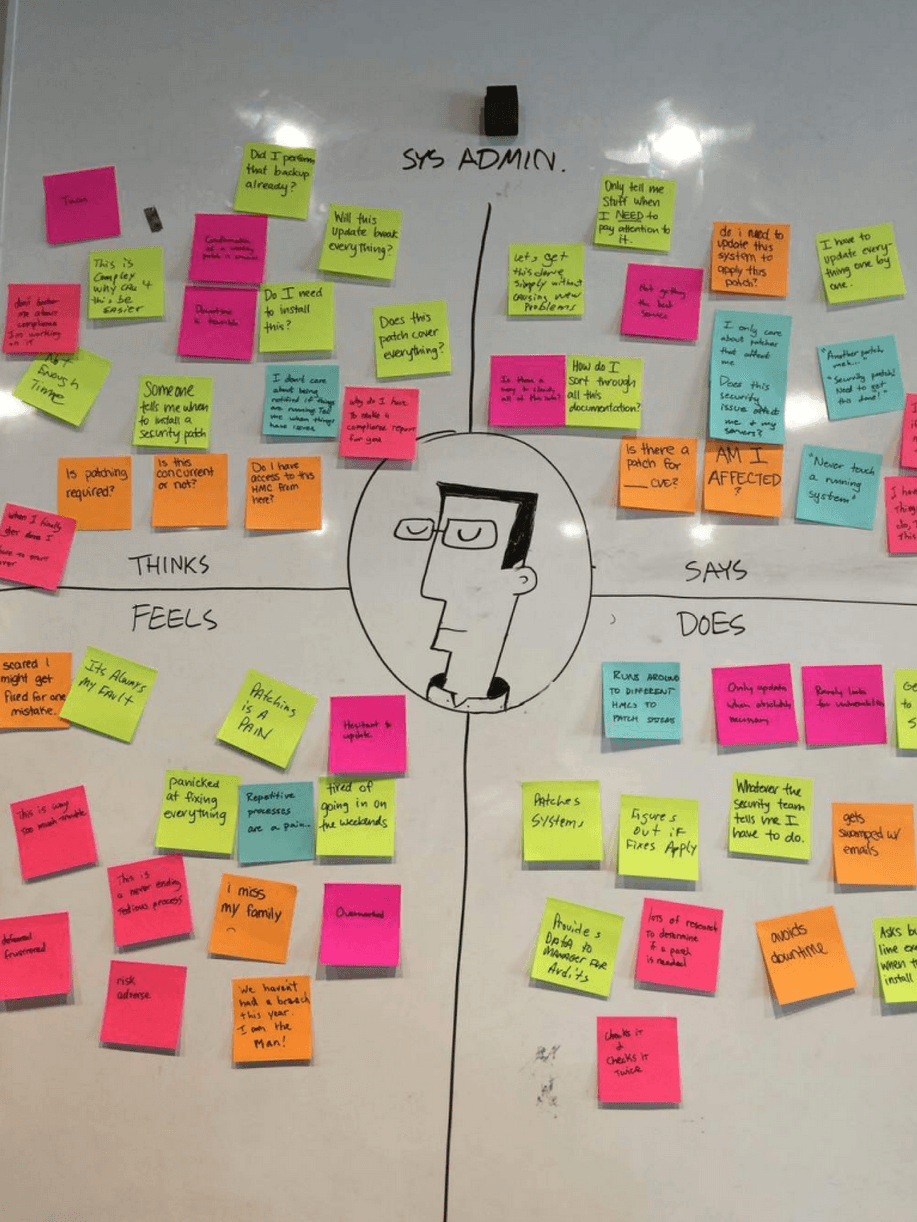
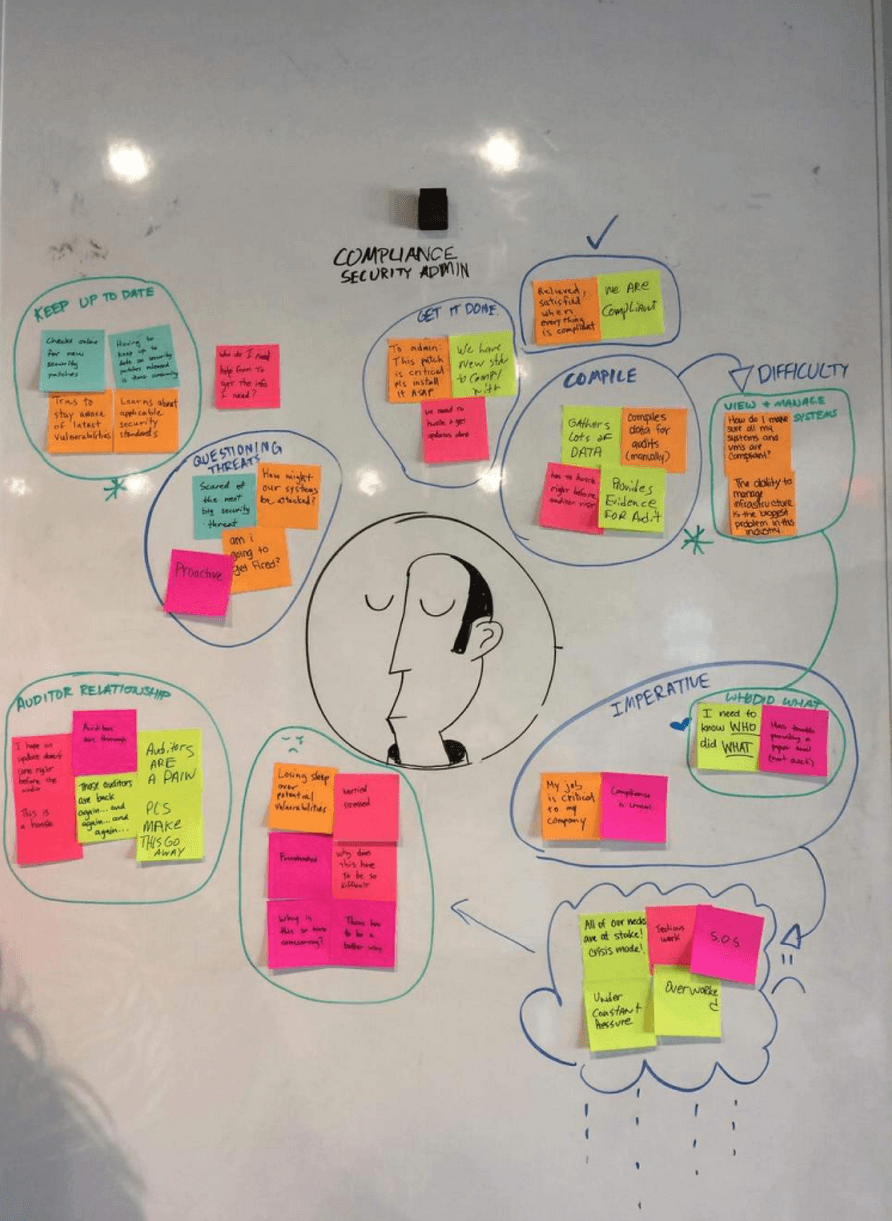
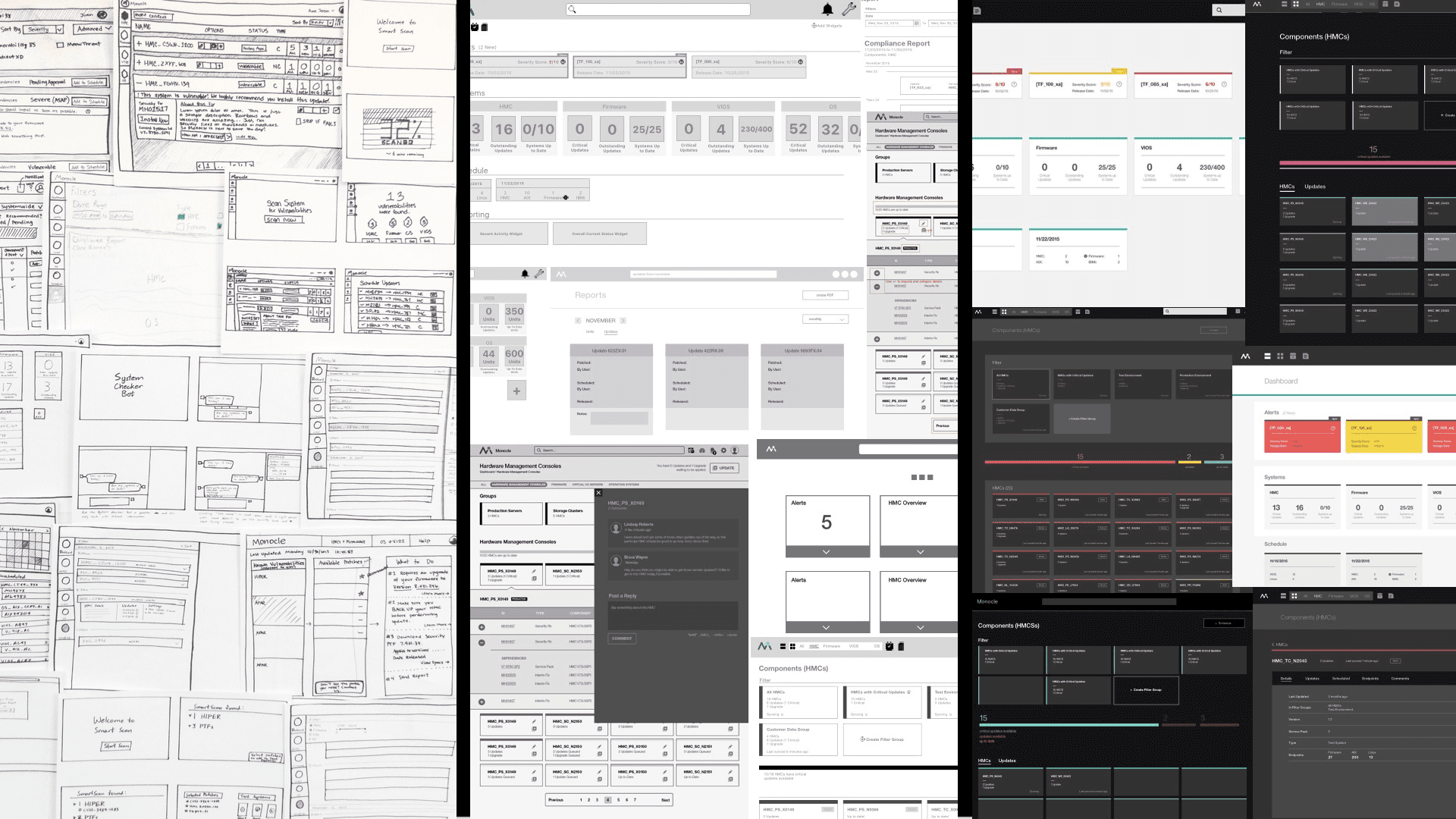
Our team iteratively contributed over 100 unique concepts over the course of 5 weeks.
To validate the "one-click update" concept, we conducted in-depth research with system administrators and their managers through user interviews, contextual inquiry, and collaborative workshopping to better understand the process behind patching these servers.
We interviewed over 30 customers, including 10 sponsor users, to gain first-hand insights into their patching workflows, pain points, and decision-making processes.
The Pivot
To validate the "one-click update" concept, we began with an unconventional approach to empathy mapping. Instead of using it as a post-interview analysis tool, we leveraged it to extract domain knowledge from our Subject Matter Experts (SMEs). This gave us a foundation to conduct meaningful conversations with our users and shaped our interview strategies.
Our design process was intense and iterative. Over just five weeks, our team generated and refined over 100 unique concepts. We moved from paper prototypes to wireframes to high-fidelity prototypes, using RITE (Rapid Iterative Testing and Evaluation) testing to validate every new interaction. Each iteration was informed by continuous user feedback, helping us refine our understanding and solution.
Graduation to Hallmark Project
To validate the "one-click update" concept, we began with an unconventional approach to empathy mapping. Instead of using it as a post-interview analysis tool, we leveraged it to extract domain knowledge from our Subject Matter Experts (SMEs). This gave us a foundation to conduct meaningful conversations with our users and shaped our interview strategies.
Our design process was intense and iterative. Over just five weeks, our team generated and refined over 100 unique concepts. We moved from paper prototypes to wireframes to high-fidelity prototypes, using RITE (Rapid Iterative Testing and Evaluation) testing to validate every new interaction. Each iteration was informed by continuous user feedback, helping us refine our understanding and solution.
50+
Workshops Conducted
30+
Customers Inteviewed
10
Sponsor Users
146
Hours of User Research
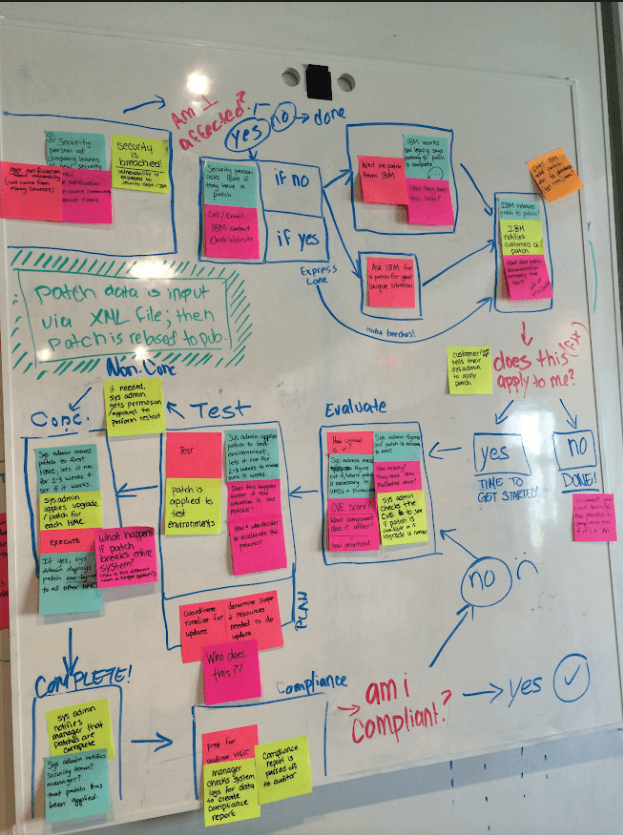
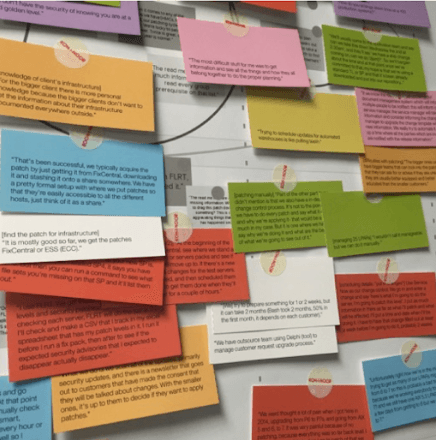
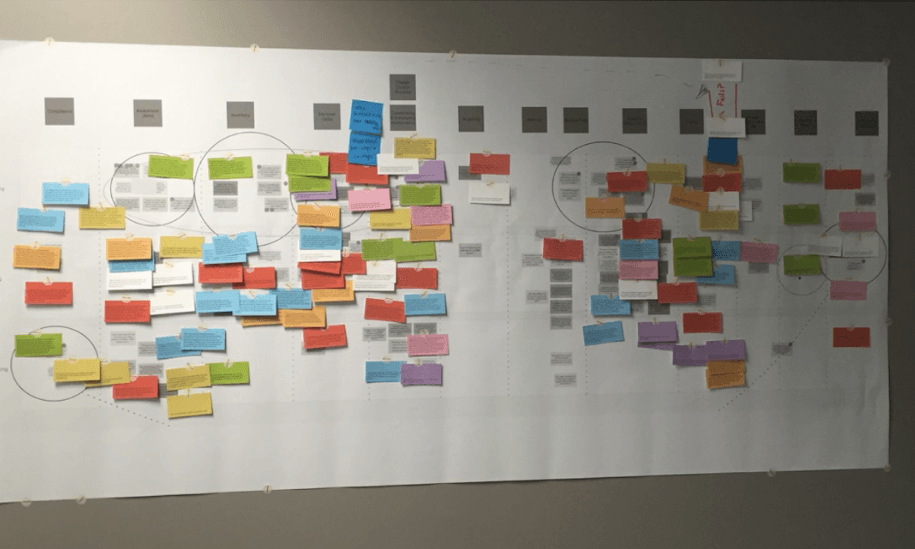
Our understanding of the process has evolved over time. Top Left: Initial mapping carried out with a subject matter expert. Top Right & Bottom: A more refined second iteration of the journey map, incorporating insights from multiple interview rounds conducted during the Hallmark Project.
“I spend 25% of my time during the first half of the year prepping for our audit in July.”
“
– IBM Power Systems Customer, Project Monocle Sponsor User
Approach
Initially a solo project, I identified an opportunity for a fintech platform through extensive user research. With a winning strategy for key stakeholder buy-in, this grew into a significant business initiative for Lowe's.
Initially a solo project, I identified an opportunity for a fintech platform through extensive user research. With a winning strategy for key stakeholder buy-in, this grew into a significant business initiative for Lowe's.
“When is the release date for Monocle? I already have reserved a portion of my budget to purchase it.”
“
– IBM Power Systems Customer, Project Monocle Sponsor User
Outcomes
My story at IBM began with an intensive design experience for new hires, culminating in a final incubator project. These projects
Initially a solo project, I identified an opportunity for a fintech platform through extensive user research. With a winning strategy for key stakeholder buy-in, this grew into a significant business initiative for Lowe's.
Doug Powell, former VP of Design at IBM, showcases Project Monocle as the case study for how design is driving business outcomes at scale during the O'Reilly Design Conference.
Patents Awarded
Patent #9361455 for Security management in a networked computer was awarded in 2016 and made headlines.
Initially a solo project, I identified an opportunity for a fintech platform through extensive user research. With a winning strategy for key stakeholder buy-in, this grew into a significant business initiative for Lowe's.
My Contributions
Design Thinking Facilitation
I designed and facilitated workshops that brought together a diverse team—including designers, developers, sponsor users, subject matter experts, and senior executives—to align on user-centered insights.
Bridged Technical and Design Gaps
I took the lead in translating complex technical concepts for our design team. I conducted user interviews, clarified technical details, and made sure everyone could effectively engage with users to generate meaningful insights. I also trained and onboarded the entire Hallmark team, equipping them with the knowledge to thrive in this technical space.
UX Design and Functional Prototyping
I played a key role in guiding the design process from research through to testing functional prototypes, bringing a technical perspective to inform and refine our concepts. I developed high-fidelity coded prototypes that emphasized action-oriented design, role-based flexibility, and extensibility—crucial for system admins who needed to act quickly and accurately.
Development and Engineering
I also created functional prototypes and designed an API that bridged security patches from Firmware to Operating System levels. These innovations were key to the final product, which was featured in IBM’s internal and external communications, including conference talks and documentary films.
There's plenty more to show you.
hello@morrimakesmagic.com
Morrigan Zierk © 2015 – 2024
All Rights Reserved.